
Innovations in Palaeontology Lecture Series
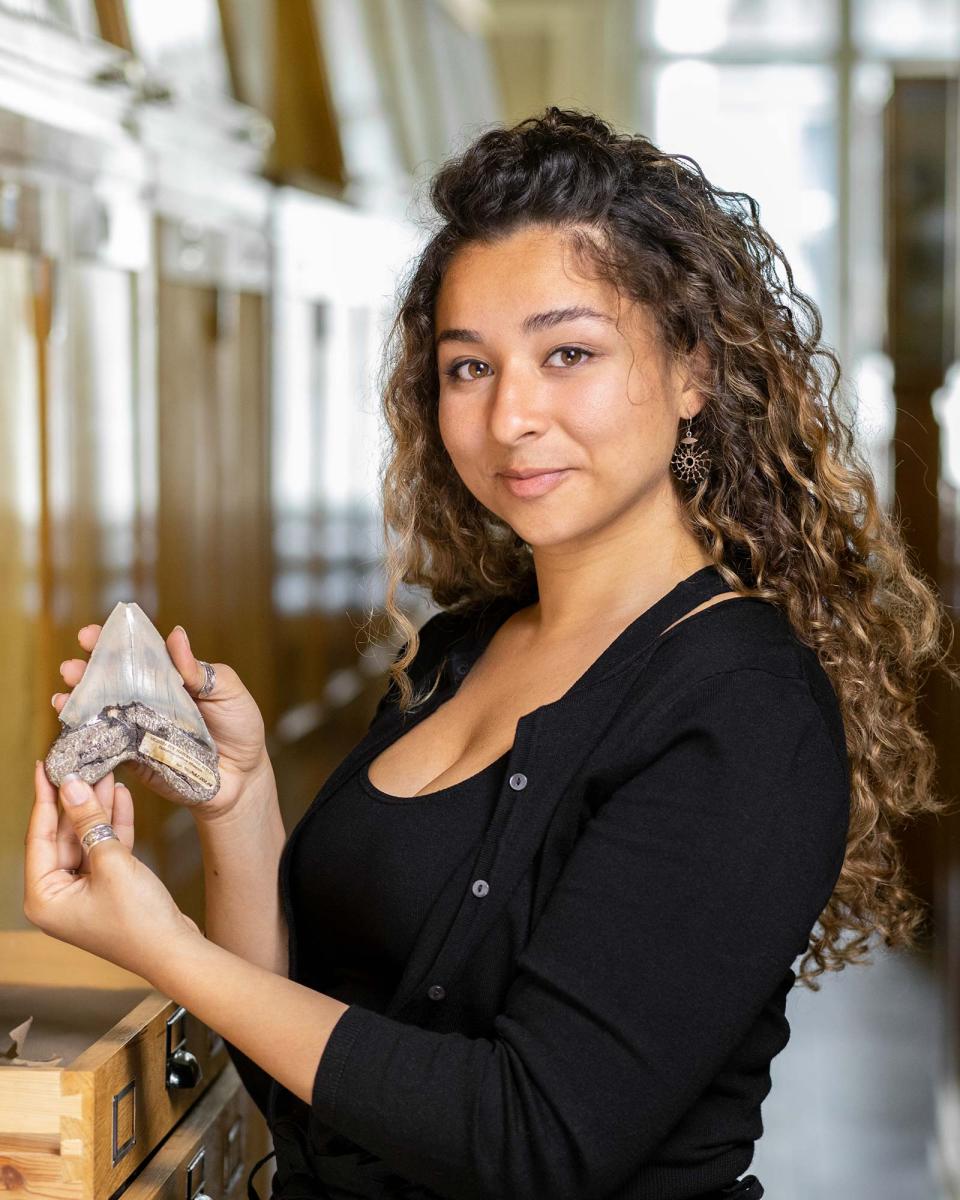
We are pleased to announce that Dr Yara Haridy from the University of Chicago, USA has been appointed as the PalAss Exceptional Lecturer for 2025/26.
Deep time origins of your skeleton and the evolution of bone disease
Where did your skeleton come from? Why does bone function the way it does? And why do your bones hurt? Bone is an evolutionary innovation that provided the scaffold for the immense diversity of vertebrates. In its skeletal role, bone provides mechanical functions, and many lesser-known physiological functions. Despite extensive research on modern bone, little is known of the origins of this complex organ. To understand the evolution, and original function of bone and its related pathologies, we use the fossil record which serves as a time machine, revealing the 465-million-year history of the vertebrate skeleton. Remarkably, the oldest known bone from Middle Ordovician jawless fish already exhibited complex differentiation of tissues and distinct morphologies. Leveraging novel 3D-imaging techniques (FIB-SEM and X-ray tomography) and machine learning, we discovered that the first skeletons shared tissues and cell types with modern bone, with surprising 'intermediate' tissues blurring traditional categories. Our research also uncovered ancient healing mechanisms, pathological tissues, and evidence of modern diseases like metabolic bone disease and osteosarcoma in fossil vertebrates. Investigating early tissue evolution reveals initial and now extinct healing mechanisms, such as ancient fishes using dentine (a tooth tissue) to heal skull bones. Interrogating the fossil record in this manner has significant biomedical implications, potentially leading to novel regenerative therapies exploiting interchangeable use of dentine, bone, or intermediate tissues for skeletal repair. Our new data supports the hypothesis that most modern skeletal tissues and their associated cellular features appeared together in the earliest fishes, in addition to other tissues that have gone extinct or only appear within modern pathologies. Our research exemplifies how the fossil record provides a unique window into skeletal evolution, bone cell interactions, growth, remodelling and healing, illuminating avenues for future research
Dr Yara Haridy - 2025/26 PalAss Exceptional Lecturer